Grid provider - Europe
Overview
SolarAssistant can source grid pricing data from the following sources:
- Nord Pool
- Octopus Energy
- European Power Exchange (EPEX)
- Tibber (Norway, Sweden, Denmark, Finland, Germany, Netherlands)
- OKTE (Slovakia)
- PSE (Poland)
If you enable it, the current electricity price per kWh in Euro cents is displayed on the dashboard as shown below.
| Display | Interpretation |
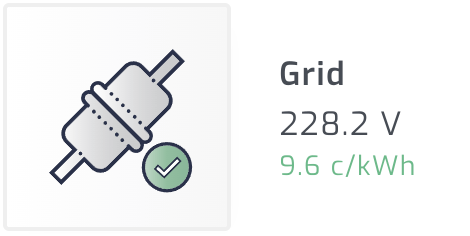 | A green electricity price indicates the price is currently lower than the daily average. |
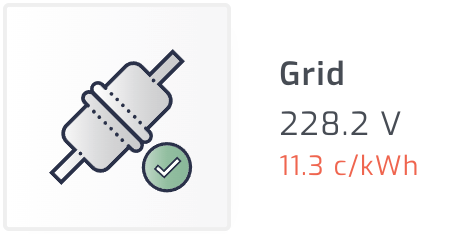 | A red electricity price indicates the price is currently higher than the daily average. |
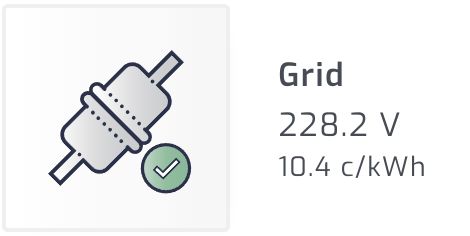 | A black electricity price indicates the price is currently close to the daily average. |
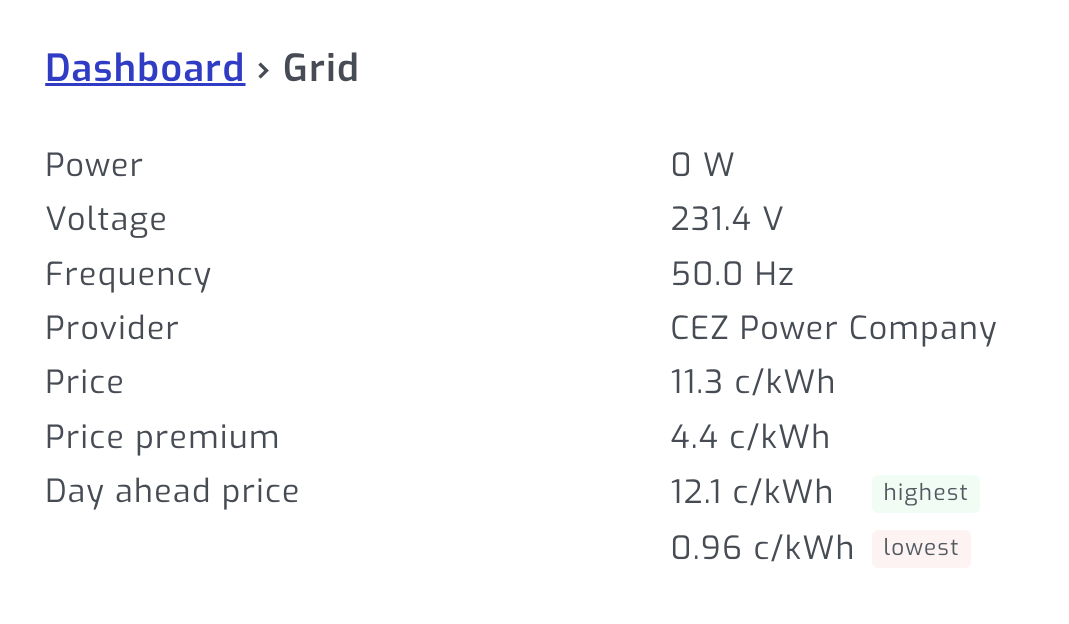
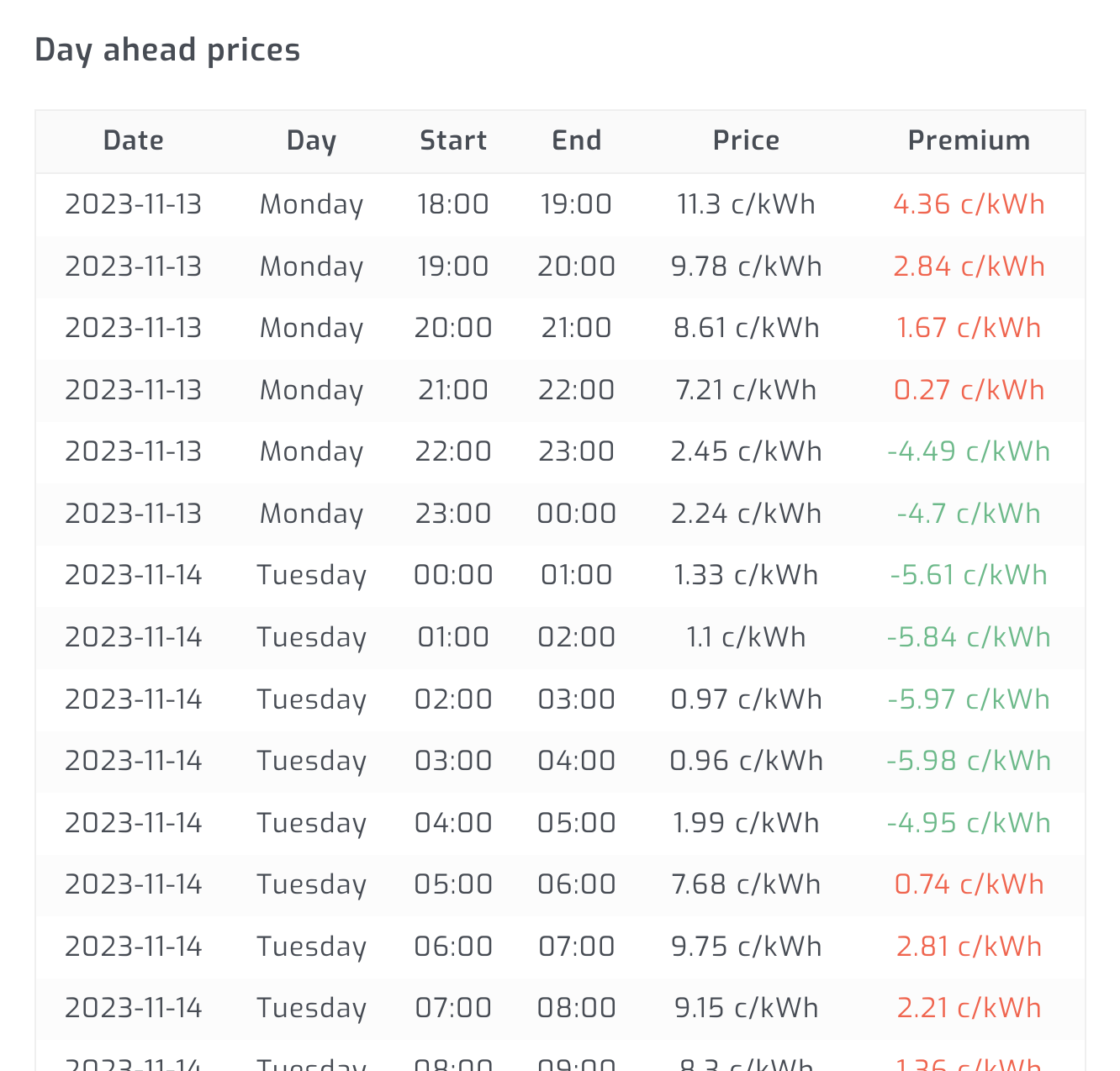
When navigating into the grid icon, the "Price premium" and "Day ahead prices" is displayed as shown below. The Price premium is the difference between the price and the daily average price.
Step 1
Select "Advanced" on the "Configuration" page.
Step 2
Set your grid provider to EPEX or Nord Pool.
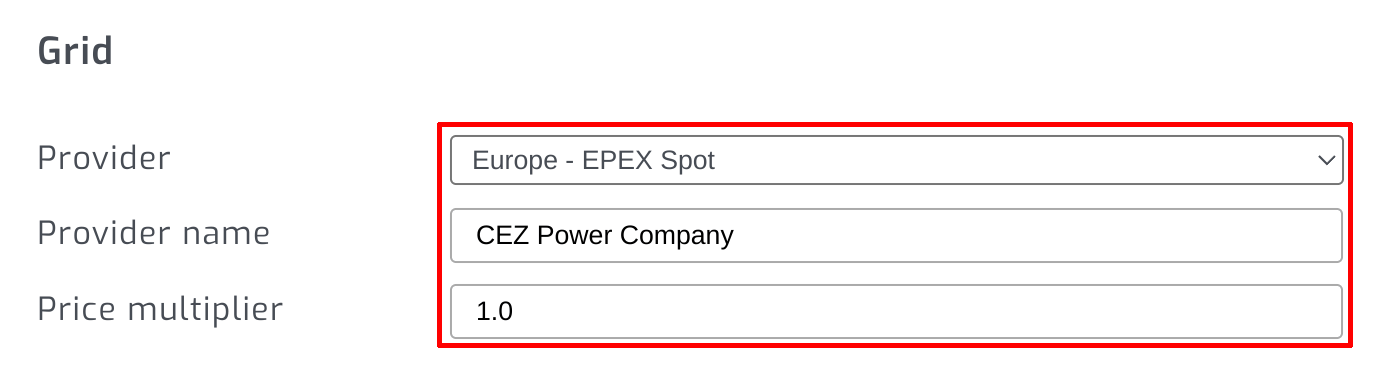
The Price multiplier and Price offset bring the displayed price closer to what you actually pay. The wholesale day-ahead price is rarely what reaches your meter — there is usually a percentage markup on top of the spot price (taxes, VAT, supplier margin) and a fixed per-kWh charge (grid fee, levies). Each slot's price is adjusted as:
displayed price = wholesale price × multiplier + offset- Price multiplier scales the wholesale price.
1.0shows the raw wholesale price. Use values above1.0to account for percentage-based markups such as VAT or supplier margin (for example,1.25for a 25% VAT). - Price offset adds a flat amount per kWh, in the same unit shown next to the field (for example cents/kWh). Use it for the fixed portion of your tariff such as grid fees and levies that do not scale with the wholesale price.
The defaults (multiplier 1.0, offset 0.0) show the unadjusted wholesale price. Tune both
until the displayed price matches a recent bill, and revisit the settings if your tariff changes.
Where does the data come from?
The data is sourced from a public API of each grid provider. SolarAssistant will query the API every hour for the latest data. The query is made to the public API directly and does not pass through SolarAssistant servers. The data is provided "as is" without any guarantee that it's correct.